Improving plumbing efficiency lowers water bills by eliminating hidden leaks, upgrading to low-flow fixtures, and maintaining water heaters and pipes before small issues become expensive repairs. Homeowners who schedule regular plumbing inspections, like those offered by Jerry’s Plumbing & Repair, often see noticeable savings within a few billing cycles by catching waste at its source rather than paying for it month after month.
Water bills have a way of creeping up quietly. One month everything looks normal, and the next you’re staring at a number that doesn’t quite add up. More often than not, the culprit isn’t a sudden change in your habits. It’s a plumbing system that has slowly become less efficient over time, whether through aging pipes, worn fixtures, or leaks that have gone unnoticed for weeks or even months.
The good news is that plumbing efficiency is one of the most controllable factors in your monthly budget. Unlike energy prices or municipal rate hikes, the condition of your home’s plumbing is something you can directly influence. Jerry’s Plumbing & Repair works with homeowners every day who are surprised to learn just how much of their water bill comes down to fixable issues rather than unavoidable usage.
This guide walks through the most common sources of plumbing inefficiency, why they matter, and what steps actually make a measurable difference on your bill.
Why does a high water bill usually point to a plumbing problem?
A water bill that climbs without an obvious explanation is almost always a sign that water is escaping somewhere it shouldn’t. This could be a slow leak in a toilet flapper, a dripping faucet, or a pinhole leak inside a wall. Individually, these issues might seem minor. A toilet that leaks silently can waste hundreds of gallons per day, according to the EPA’s WaterSense program, which adds up to real money over a billing cycle.
The reason these problems go unnoticed for so long is that they rarely announce themselves. A running toilet might only run for a few seconds after each flush. A leaky pipe under a sink might drip so slowly that it evaporates before pooling. Jerry’s Plumbing & Repair recommends treating an unexplained bill increase as a signal worth investigating immediately, rather than assuming it will resolve on its own.
How much water do old fixtures actually waste?
Older toilets, faucets, and showerheads were built for a different era of water use standards. A toilet manufactured before 1994 can use as much as 3.5 to 7 gallons per flush, compared to the 1.28 gallons or less used by modern WaterSense-labeled models. Multiply that difference across every flush in a household over a year, and the gap becomes significant.
The same logic applies to faucets and showerheads. Low-flow fixtures are engineered to maintain water pressure while using less volume, so the switch doesn’t require sacrificing comfort. Replacing outdated fixtures is one of the fastest ways to see a change in usage, since the savings begin the moment the new fixture is installed rather than depending on a repair being completed correctly.
What role does water heater maintenance play in plumbing efficiency?
Cache Valley Plumbing Inspection
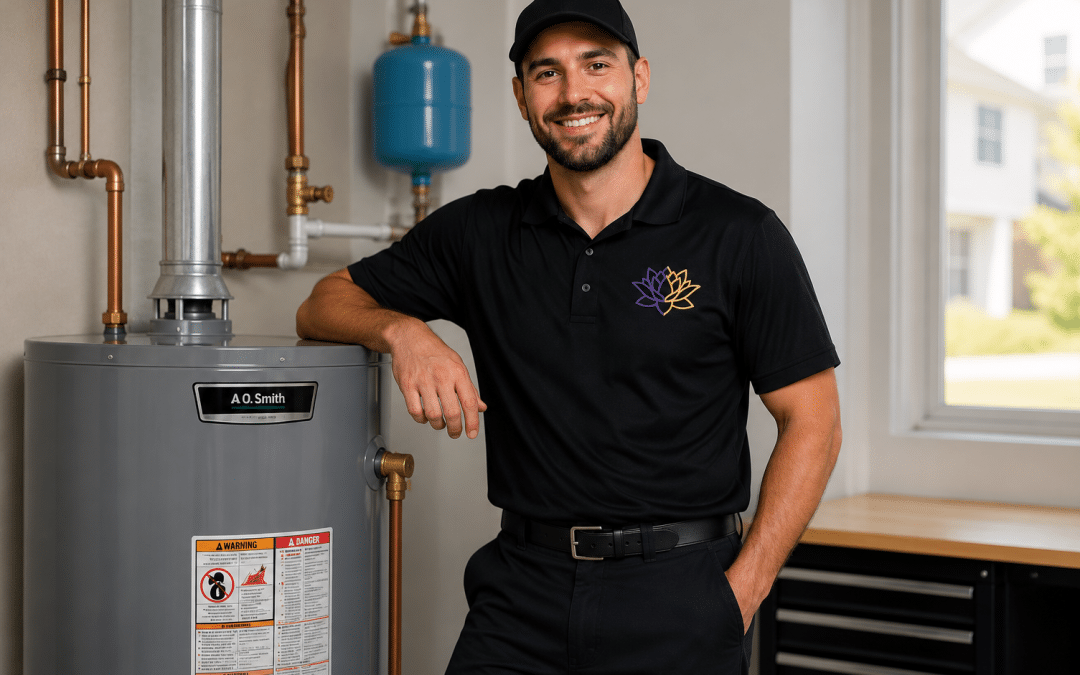
Water heaters are easy to forget about until they stop working, but their efficiency directly affects both water and energy bills. Sediment builds up at the bottom of a tank over time, forcing the unit to work harder to heat the same amount of water. This not only increases energy costs but can also shorten the lifespan of the heater itself.
Flushing a water heater annually removes this sediment buildup and helps the unit run the way it was designed to. Jerry’s Plumbing & Repair also checks for issues like a failing temperature and pressure relief valve or a thermostat that’s out of calibration, both of which can quietly waste water and energy without being obvious to a homeowner.
Can pipe insulation and repairs reduce water waste?
Pipes that aren’t properly insulated force water heaters to work overtime, especially in colder months, and they’re also more prone to condensation and, in extreme cases, freezing and bursting. Insulating exposed pipes in basements, crawl spaces, and exterior walls helps maintain water temperature as it travels through the system, which reduces the amount of water run down the drain while waiting for it to heat up at the tap.
Aging pipes present a different challenge. Corrosion and mineral buildup inside older piping can restrict flow, leading homeowners to run water longer than necessary to get adequate pressure. In some cases, replacing a short section of corroded pipe resolves an inefficiency that had been mistaken for a plumbing system’s normal behavior.
Why is a professional plumbing inspection worth the investment?
Many efficiency issues aren’t visible during a casual walkthrough of a home. Leaks inside walls, under slabs, or within irrigation lines require specialized tools to detect accurately. A professional inspection from a company like Jerry’s Plumbing & Repair typically includes pressure testing, camera inspection of pipes, and a review of every fixture and appliance connected to the water supply.
This kind of thorough check often uncovers issues homeowners didn’t know existed, from a slow leak behind a washing machine to a worn valve in an irrigation system. Catching these problems early prevents them from escalating into water damage repairs, which are almost always more expensive than the plumbing fix itself would have been.
What daily habits support long-term plumbing efficiency?

Beyond repairs and upgrades, a few consistent habits help maintain the gains made through efficiency improvements. Running dishwashers and washing machines only with full loads reduces unnecessary cycles. Turning off the tap while brushing teeth or scrubbing dishes, rather than letting it run continuously, adds up over the course of a year. Checking visible fixtures periodically for drips or corrosion helps catch new issues before they grow.
None of these habits require major lifestyle changes, but combined with the mechanical improvements covered above, they create a plumbing system that wastes as little water as possible.
Start with an inspection, not a guess
Guessing at the source of a high water bill often leads to fixes that don’t address the actual problem. A new showerhead won’t help if the real issue is a leaking pipe behind a wall, and a water heater flush won’t matter much if an old toilet is running around the clock.
The most reliable path to a lower water bill starts with an accurate diagnosis. Scheduling an inspection with a trusted provider like Jerry’s Plumbing & Repair gives homeowners a clear picture of exactly where water and money are being lost, along with a prioritized plan for fixing it. From there, the improvements outlined in this guide, from fixture upgrades to pipe insulation, translate directly into savings that show up on the very next bill. Reach out by calling (435) 563-6488.